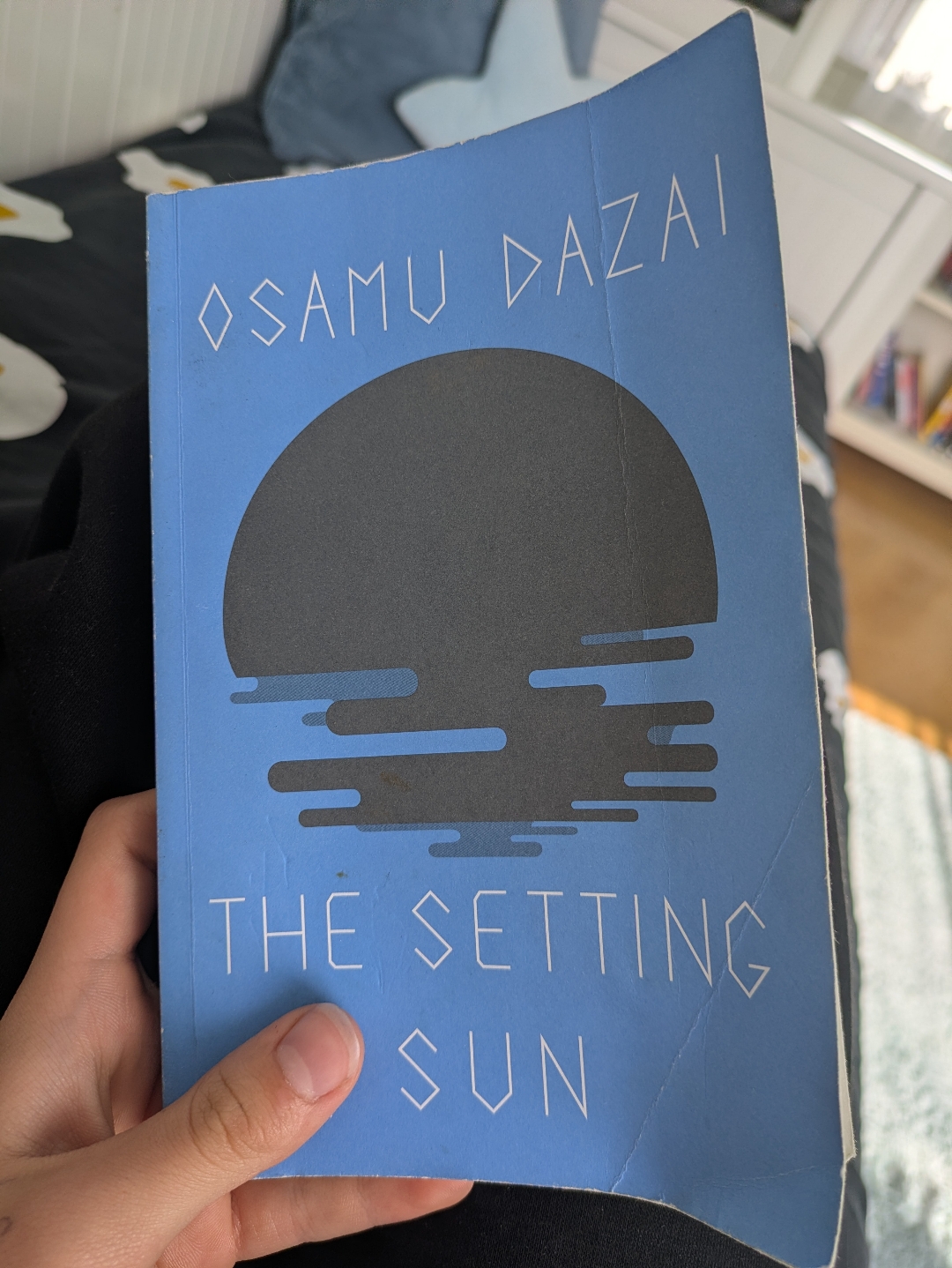
The Setting Sun
Buy Now




By using these links, you support READO. We receive an affiliate commission without any additional costs to you.
Description
Book Information
Characteristics
1 reviews
Mood
Protagonist(s)
Pace
Writing Style
Posts

A despressing book, just like Dazai's other work.
--slight spoilers-- This is the second novel im reading from Ozamu Dazai, and again I was pulled into a world of sorrow. Dazais Imagery is incredibly strong and every szene feels real. It pulls the reader into this world he created, very carefully. With Kazuko as the main character, who is quite unlikeable, we get to know someone who embodies the hatred toward Japan’s aristocracy after the second World War. Although most of the characters are unpleasant, even terrible human beings at times, they still are deeply sensitive, emotional, and intelligent. I couldn't help but feel pity for them. Naoji’s storyline, in particular, made me both empathize with and despise him at the same time. Thematically, I appreciated the novel’s realism, including traditional literature and art. However, the flashbacks, which Dazai uses a lot, and the occasional mention of characters who appear only once or twice made the reading experience a little difficult. This story seems like a reflection of Dazai’s own sad life, with him being the reflection of Naoji.


Before you read this book it’s (in my opinion) quite important to educate yourself a bit about pre- and post ww2 Japan and what role the aristocrats played there since the book pretty much revolves around post ww2 Japanese aristocrats and their downfall.An important book about an interesting time period.It’s unraveling the struggles of a changing society and structure, the remnants of war but at the same time personal and universal baggages like love, illness and death.I was also glad to read something from Dazai that ended on a more hopeful note with a Protagonist that is not giving up, unlike most of his other protagonists.

Before you read this book it’s (in my opinion) quite important to educate yourself a bit about pre- and post ww2 Japan and what role the aristocrats played there since the book pretty much revolves around post ww2 Japanese aristocrats and their downfall. A very important book about an interesting time period. It’s unraveling the struggles of a changing society and structure, the remnants of war but at the same time personal and universal baggages like love, illness and death. I was also glad to read something from Dazai that ended on a more hopeful note with a Protagonist that is not giving up, unlike most of his other protagonists.

"But when I inadvertently groaned because I was really in pain, they started the rumor that I was faking suffering."
Wow. Dieses Buch hat meine Perspektive auf die Welt komplett verändert. Es war deprimierend, alles erschien grau in diesem Buch, aber such zurecht. Es handelt von der Zeit nach dem Japanischen Krieg. Dieses Buch war genauso Deprimierend wie die anderen Bücher von Osamu Dazai. Er starb 1948 and Selbstm0rd und auch in diesem Buch wird viel davon geredet. Kazuko nachvollziehbar, genauso wie ihr Bruder, Naoji. Kazukos Mutter war krank, schwer krank, und leidete schwer an mehreren Krankheiten. Ich habe das Buch auf englisch gelesen, was es ein wenig komplizierter machte es zu lesen, jedoch war es doch so gut, dass ich es in 4 Tagen geschafft habe mit Klausurenphase und komplexer sprache. 💔
Characteristics
1 reviews
Mood
Protagonist(s)
Pace
Writing Style
Description
Book Information
Posts
A despressing book, just like Dazai's other work.
--slight spoilers-- This is the second novel im reading from Ozamu Dazai, and again I was pulled into a world of sorrow. Dazais Imagery is incredibly strong and every szene feels real. It pulls the reader into this world he created, very carefully. With Kazuko as the main character, who is quite unlikeable, we get to know someone who embodies the hatred toward Japan’s aristocracy after the second World War. Although most of the characters are unpleasant, even terrible human beings at times, they still are deeply sensitive, emotional, and intelligent. I couldn't help but feel pity for them. Naoji’s storyline, in particular, made me both empathize with and despise him at the same time. Thematically, I appreciated the novel’s realism, including traditional literature and art. However, the flashbacks, which Dazai uses a lot, and the occasional mention of characters who appear only once or twice made the reading experience a little difficult. This story seems like a reflection of Dazai’s own sad life, with him being the reflection of Naoji.
Before you read this book it’s (in my opinion) quite important to educate yourself a bit about pre- and post ww2 Japan and what role the aristocrats played there since the book pretty much revolves around post ww2 Japanese aristocrats and their downfall.An important book about an interesting time period.It’s unraveling the struggles of a changing society and structure, the remnants of war but at the same time personal and universal baggages like love, illness and death.I was also glad to read something from Dazai that ended on a more hopeful note with a Protagonist that is not giving up, unlike most of his other protagonists.
Before you read this book it’s (in my opinion) quite important to educate yourself a bit about pre- and post ww2 Japan and what role the aristocrats played there since the book pretty much revolves around post ww2 Japanese aristocrats and their downfall. A very important book about an interesting time period. It’s unraveling the struggles of a changing society and structure, the remnants of war but at the same time personal and universal baggages like love, illness and death. I was also glad to read something from Dazai that ended on a more hopeful note with a Protagonist that is not giving up, unlike most of his other protagonists.
"But when I inadvertently groaned because I was really in pain, they started the rumor that I was faking suffering."
Wow. Dieses Buch hat meine Perspektive auf die Welt komplett verändert. Es war deprimierend, alles erschien grau in diesem Buch, aber such zurecht. Es handelt von der Zeit nach dem Japanischen Krieg. Dieses Buch war genauso Deprimierend wie die anderen Bücher von Osamu Dazai. Er starb 1948 and Selbstm0rd und auch in diesem Buch wird viel davon geredet. Kazuko nachvollziehbar, genauso wie ihr Bruder, Naoji. Kazukos Mutter war krank, schwer krank, und leidete schwer an mehreren Krankheiten. Ich habe das Buch auf englisch gelesen, was es ein wenig komplizierter machte es zu lesen, jedoch war es doch so gut, dass ich es in 4 Tagen geschafft habe mit Klausurenphase und komplexer sprache. 💔