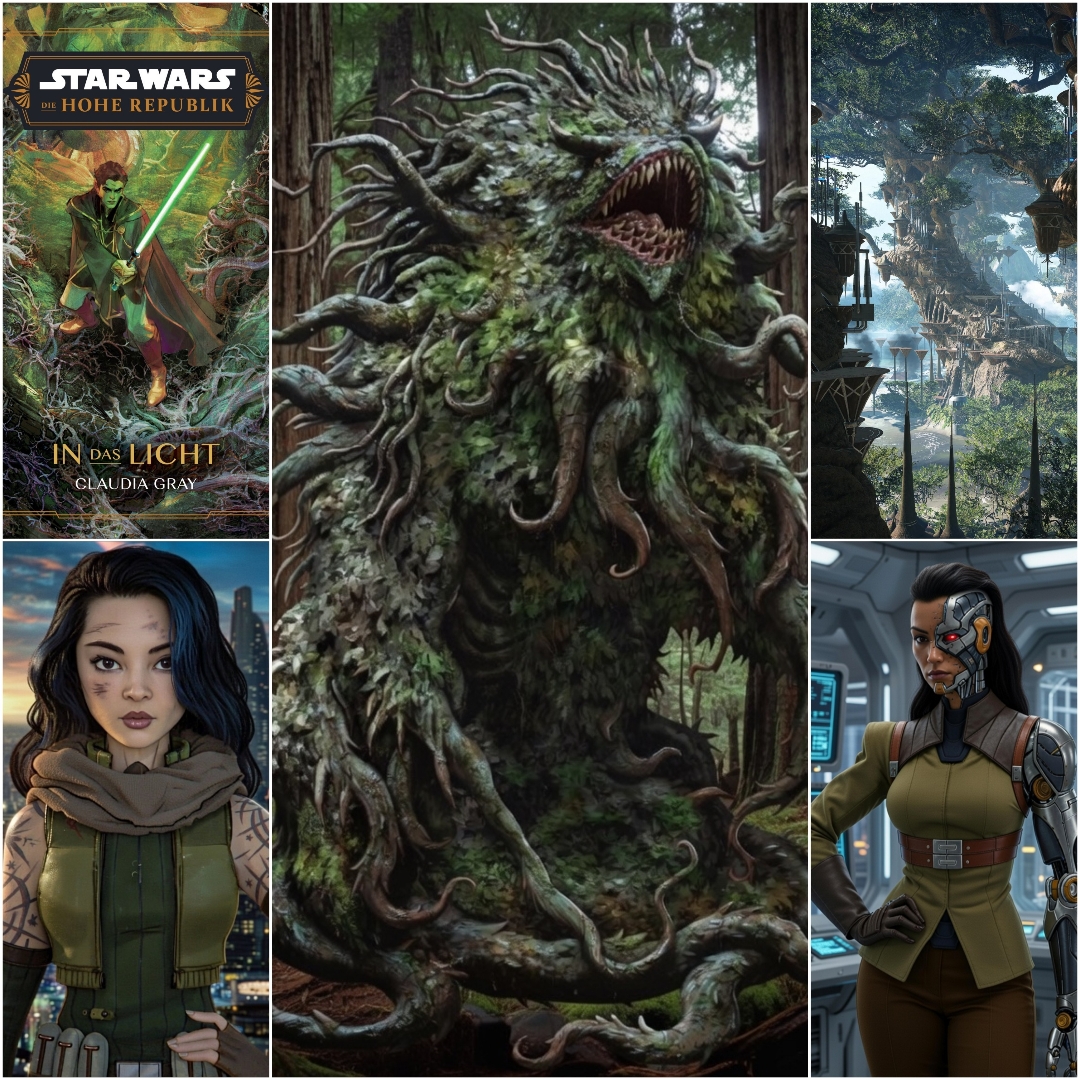
Star Wars: Die Hohe Republik - In das Licht
Jetzt kaufen




Durch das Verwenden dieser Links unterstützt du READO. Wir erhalten eine Vermittlungsprovision, ohne dass dir zusätzliche Kosten entstehen.
Beschreibung
Buchinformationen
Autorenbeschreibung
Claudia Gray ist das Pseudonym von Amy Vincent. Sie ist die Autorin der Mr. Darcy & Miss Tilney- Krimis sowie mehrerer Jugendromane. Außerdem hat sie diverse Star Wars- Romane geschrieben. In das Licht ist ihr siebter Roman, der in der weit, weit entfernten Galaxis spielt. Sie lebt gemeinsam mit ihrem Ehemann Paul in Turin, Italien, unter der wohlwollenden Herrschaft ihres kleinen Hundes Peaches.
Beiträge

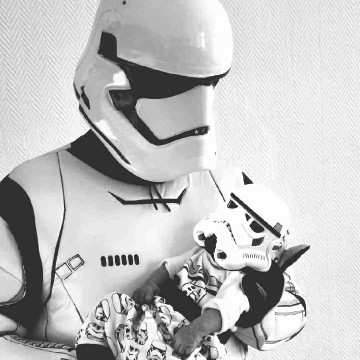
So viele wow Momente 🤌🏻
Rezension • In das Licht 4/5 ⭐ Q: Habt ihr eine/n liebste/n Fantasy-Autor/in? 👤 Ihr wisst ja nicht wie sehr ich mich auf dieses Buch gefreut habe- und ich wurde nicht enttäuscht ⭐ In das Licht ist der letzte Band der Jugendbücher der letzten Phase der hohen Republik. Wir gehen dem Mysterium der Seuche weiter auf die Spur und finden heraus welche Rolle die Drengir und die dunkle Seite der Macht spielt und was das alles mit Kashyyk auf sich hat. Die Charakterentwicklungen in diesem Band sind auch wieder große Klasse gewesen 🫂 Unvorhersehbare Entscheidungen, Plot-Twists und einige echt traurige, super emotionale Momente bei denen ich einige Tränen verdrücken musste 🥹 Alles in allem ein super Buch, was total Lust auf den letzten Band der hohen Republik "Adult" Bücher macht! Der eine Stern Abzug ist einfach persönlicher beef mit dem Schreibstil von Claudia Grey. Ich find den okay, aber er kann mich leider noch lange nicht so mitreißen wie die von Charles Soule oder Tessa Gretton. Aber wenn ihr ihren Schreibstil mögt steht euch eurem nächsten Highlight nichts im Wege 😉 Danke @panini für das Rezensionsexemplar! 🫂
Kampf um Kashyyyk
Die Verderbnis hat die Heimatwelt der Wookies erreicht. Und nicht nur diese. Auch die Drengir, aggressiver denn je, sind wieder auf Jagd. Kann am Ende sogar die dunkle Seite der Macht eine Lösung für die unzähligen Probleme sein oder bleibt das Licht die einzige Hoffnung? Einer der letzten drei Bücher des gesamten Projekts ist unterhaltsam und SPOILER: Der Tod eines lieb gewonnen Charakters kam zum Ende hin doch überraschend.

Mit dem abschließenden YA Buch der High Republic, rücken fast alle unsere Helden (und auch Antagonisten) aus Into the Dark (dem ersten YA Buch) in den Fokus. Man merkt wie sehr die Charaktere besonders Reath seit dem gereift sind und es hat mich schon etwas emotional gemacht, dass die High Republic Bücher zu einem Ende kommen. Generell war es super interessant, da viele Aspekte ein geworfen wurden über die ich mir noch keine Gedanken gemacht hatte. Zudem habe ich es sehr genossen mehr üner Kashyyyk und die Wookies zu erfahren.

Star Wars: The High Republic Into the Light by Claudia Gray was a book I was cautiously optimistic about. Claudia Gray has written some very good Star Wars novels (Lost Stars, Leia: Princess of Alderaan, Bloodline and more), and I would also call Into the Dark one of the best High Republic books, which set a high bar for the YA line. Sadly, Into the Light doesn’t quite live up to that level though it’s definitely better than The Fallen Star. It’s a book with some standout moments, but also one that struggles with cohesion, payoff, and staying connected to the broader initiative.<spoiler> One of the things I appreciated most was the return of actual worldbuilding — something that has been mostly missing since Phase I. I often use The Rising Storm as a benchmark for how well the High Republic can immerse you in the galaxy, and in that regard, Into the Light felt like a small return to form. The highlight here was without question the inclusion of Kenari, the planet first introduced in Andor. Gray notes in the acknowledgements how much she loves the series, and it really shows. By tying Kenari to Czerka exploitation, she not only gives weight to the planet’s suffering but also connects the High Republic era to later and previously published stories in a satisfying way. It’s exactly the kind of worldbuilding I love reminiscent of how James Luceno used to seamlessly tie various parts of the galaxy together. It makes the galaxy feel textured and layered, rather than episodic.Another element that stood out was the introduction of the Thornseed an ancient Sith weapon that, despite being new to Star Wars, fits almost too well into the puzzle. It adds yet another piece suggesting that the Sith may have played a role in the creation of the Blight, and perhaps even the Nameless. It’s an intriguing connection that strengthens the sense of an underlying threat while deepening the mystery. It also makes Azlin Rell’s strange behavior more compelling. His use of Force lightning is unexpected, but not without context throughout Phase III, he's been hinting at knowledge of the Sith, even referencing them explicitly in Shadows of Starlight as one of the groups being threatened by the Nameless, despite the Sith supposedly being extinct. His presence raises serious questions, and while the book doesn’t resolve them, it plants fascinating seeds. I also really liked the inclusion of Kelnacca from The Acolyte a small but effective way to weave in other corners of the canon without forcing it.That said, the book suffers from the same disjointed character work that has plagued much of the YA line. Reath is a character I’ve always liked, but his development feels stuck in a loop. Each book pairs him with someone new, Dez in Into the Dark, Ram in Midnight Horizon, and now Amaddeo and Nan (who was also present in Into the Dark, though more as an antagonist than a friend) but these relationships rarely have lasting impact. His chemistry with Ram in Midnight Horizon was fantastic, yet here it's basically erased. Amaddeo, who had a major role in Tears of the Nameless, is barely even present. Reath’s journey feels static, and even the resolution (or lack thereof) in this book leaves him in a strange emotional limbo.Worse still, many story threads from Tears of the Nameless are dropped or reduced to throwaway lines. The ancient Tolemite civilization, the metal that seemed to offer some form of protection or counter to the Nameless, Silandra Sho’s shield all of it either ignored or vaguely referenced. Even Marchion Ro, once a central and constantly evolving antagonist, now feels directionless. He’s present, yes, but doesn’t do much of anything. In Phase I, he was full of surprises; in Phase III, he feels like a leftover piece the writers don’t quite know what to do with or perhaps are saving for the grand finale of the initiative.The book also suffers from an increasingly frustrating reliance on outside media. The reappearance of the Drengir aboard the Innovator is one example without the Seeds of the Past and Haunted Starlight audio dramas, the scene makes little sense. This was already a problem in The Fallen Star, and it reappears here. Requiring readers to engage with every piece of High Republic media across multiple formats to understand basic plot elements should not be the way to go.There are also timeline inconsistencies that hurt the overall cohesion. For instance, the events of Light of the Jedi and Into the Dark are established to span at least a month, but this book compresses that gap into “a few days.” Reath reflects on his time training with Cohmac as lasting only a few months, when in reality, it's been about two years. While it’s true that Phase III takes place roughly a year after Phase I, the way it's framed makes it feel like almost no time has passed since the start of the initiative. These are relatively small details, but they add up and create a sense that the editorial team isn’t fully aligned.Despite all that, there are moments that genuinely shine. Nan’s storyline is well done and gets a fitting resolution. Gray’s writing is still emotionally effective, and there are scenes that genuinely land. But the book overall feels fragmented as if it’s trying to close the door on the YA series while not quite knowing how to do it. There are too many threads, too many ideas only partially explored. And with Trials of the Jedi on the horizon, I’m honestly unsure how all of this will be wrapped up or if it even will be. </spoiler>If you're deeply invested in The High Republic and enjoy piecing together lore, Into the Light still has value. But if you're looking for answers, narrative payoff, or the sense that the initiative is building toward a satisfying end, this one might leave you frustrated.
Beschreibung
Buchinformationen
Autorenbeschreibung
Claudia Gray ist das Pseudonym von Amy Vincent. Sie ist die Autorin der Mr. Darcy & Miss Tilney- Krimis sowie mehrerer Jugendromane. Außerdem hat sie diverse Star Wars- Romane geschrieben. In das Licht ist ihr siebter Roman, der in der weit, weit entfernten Galaxis spielt. Sie lebt gemeinsam mit ihrem Ehemann Paul in Turin, Italien, unter der wohlwollenden Herrschaft ihres kleinen Hundes Peaches.
Beiträge
So viele wow Momente 🤌🏻
Rezension • In das Licht 4/5 ⭐ Q: Habt ihr eine/n liebste/n Fantasy-Autor/in? 👤 Ihr wisst ja nicht wie sehr ich mich auf dieses Buch gefreut habe- und ich wurde nicht enttäuscht ⭐ In das Licht ist der letzte Band der Jugendbücher der letzten Phase der hohen Republik. Wir gehen dem Mysterium der Seuche weiter auf die Spur und finden heraus welche Rolle die Drengir und die dunkle Seite der Macht spielt und was das alles mit Kashyyk auf sich hat. Die Charakterentwicklungen in diesem Band sind auch wieder große Klasse gewesen 🫂 Unvorhersehbare Entscheidungen, Plot-Twists und einige echt traurige, super emotionale Momente bei denen ich einige Tränen verdrücken musste 🥹 Alles in allem ein super Buch, was total Lust auf den letzten Band der hohen Republik "Adult" Bücher macht! Der eine Stern Abzug ist einfach persönlicher beef mit dem Schreibstil von Claudia Grey. Ich find den okay, aber er kann mich leider noch lange nicht so mitreißen wie die von Charles Soule oder Tessa Gretton. Aber wenn ihr ihren Schreibstil mögt steht euch eurem nächsten Highlight nichts im Wege 😉 Danke @panini für das Rezensionsexemplar! 🫂
Kampf um Kashyyyk
Die Verderbnis hat die Heimatwelt der Wookies erreicht. Und nicht nur diese. Auch die Drengir, aggressiver denn je, sind wieder auf Jagd. Kann am Ende sogar die dunkle Seite der Macht eine Lösung für die unzähligen Probleme sein oder bleibt das Licht die einzige Hoffnung? Einer der letzten drei Bücher des gesamten Projekts ist unterhaltsam und SPOILER: Der Tod eines lieb gewonnen Charakters kam zum Ende hin doch überraschend.
Mit dem abschließenden YA Buch der High Republic, rücken fast alle unsere Helden (und auch Antagonisten) aus Into the Dark (dem ersten YA Buch) in den Fokus. Man merkt wie sehr die Charaktere besonders Reath seit dem gereift sind und es hat mich schon etwas emotional gemacht, dass die High Republic Bücher zu einem Ende kommen. Generell war es super interessant, da viele Aspekte ein geworfen wurden über die ich mir noch keine Gedanken gemacht hatte. Zudem habe ich es sehr genossen mehr üner Kashyyyk und die Wookies zu erfahren.
Star Wars: The High Republic Into the Light by Claudia Gray was a book I was cautiously optimistic about. Claudia Gray has written some very good Star Wars novels (Lost Stars, Leia: Princess of Alderaan, Bloodline and more), and I would also call Into the Dark one of the best High Republic books, which set a high bar for the YA line. Sadly, Into the Light doesn’t quite live up to that level though it’s definitely better than The Fallen Star. It’s a book with some standout moments, but also one that struggles with cohesion, payoff, and staying connected to the broader initiative.<spoiler> One of the things I appreciated most was the return of actual worldbuilding — something that has been mostly missing since Phase I. I often use The Rising Storm as a benchmark for how well the High Republic can immerse you in the galaxy, and in that regard, Into the Light felt like a small return to form. The highlight here was without question the inclusion of Kenari, the planet first introduced in Andor. Gray notes in the acknowledgements how much she loves the series, and it really shows. By tying Kenari to Czerka exploitation, she not only gives weight to the planet’s suffering but also connects the High Republic era to later and previously published stories in a satisfying way. It’s exactly the kind of worldbuilding I love reminiscent of how James Luceno used to seamlessly tie various parts of the galaxy together. It makes the galaxy feel textured and layered, rather than episodic.Another element that stood out was the introduction of the Thornseed an ancient Sith weapon that, despite being new to Star Wars, fits almost too well into the puzzle. It adds yet another piece suggesting that the Sith may have played a role in the creation of the Blight, and perhaps even the Nameless. It’s an intriguing connection that strengthens the sense of an underlying threat while deepening the mystery. It also makes Azlin Rell’s strange behavior more compelling. His use of Force lightning is unexpected, but not without context throughout Phase III, he's been hinting at knowledge of the Sith, even referencing them explicitly in Shadows of Starlight as one of the groups being threatened by the Nameless, despite the Sith supposedly being extinct. His presence raises serious questions, and while the book doesn’t resolve them, it plants fascinating seeds. I also really liked the inclusion of Kelnacca from The Acolyte a small but effective way to weave in other corners of the canon without forcing it.That said, the book suffers from the same disjointed character work that has plagued much of the YA line. Reath is a character I’ve always liked, but his development feels stuck in a loop. Each book pairs him with someone new, Dez in Into the Dark, Ram in Midnight Horizon, and now Amaddeo and Nan (who was also present in Into the Dark, though more as an antagonist than a friend) but these relationships rarely have lasting impact. His chemistry with Ram in Midnight Horizon was fantastic, yet here it's basically erased. Amaddeo, who had a major role in Tears of the Nameless, is barely even present. Reath’s journey feels static, and even the resolution (or lack thereof) in this book leaves him in a strange emotional limbo.Worse still, many story threads from Tears of the Nameless are dropped or reduced to throwaway lines. The ancient Tolemite civilization, the metal that seemed to offer some form of protection or counter to the Nameless, Silandra Sho’s shield all of it either ignored or vaguely referenced. Even Marchion Ro, once a central and constantly evolving antagonist, now feels directionless. He’s present, yes, but doesn’t do much of anything. In Phase I, he was full of surprises; in Phase III, he feels like a leftover piece the writers don’t quite know what to do with or perhaps are saving for the grand finale of the initiative.The book also suffers from an increasingly frustrating reliance on outside media. The reappearance of the Drengir aboard the Innovator is one example without the Seeds of the Past and Haunted Starlight audio dramas, the scene makes little sense. This was already a problem in The Fallen Star, and it reappears here. Requiring readers to engage with every piece of High Republic media across multiple formats to understand basic plot elements should not be the way to go.There are also timeline inconsistencies that hurt the overall cohesion. For instance, the events of Light of the Jedi and Into the Dark are established to span at least a month, but this book compresses that gap into “a few days.” Reath reflects on his time training with Cohmac as lasting only a few months, when in reality, it's been about two years. While it’s true that Phase III takes place roughly a year after Phase I, the way it's framed makes it feel like almost no time has passed since the start of the initiative. These are relatively small details, but they add up and create a sense that the editorial team isn’t fully aligned.Despite all that, there are moments that genuinely shine. Nan’s storyline is well done and gets a fitting resolution. Gray’s writing is still emotionally effective, and there are scenes that genuinely land. But the book overall feels fragmented as if it’s trying to close the door on the YA series while not quite knowing how to do it. There are too many threads, too many ideas only partially explored. And with Trials of the Jedi on the horizon, I’m honestly unsure how all of this will be wrapped up or if it even will be. </spoiler>If you're deeply invested in The High Republic and enjoy piecing together lore, Into the Light still has value. But if you're looking for answers, narrative payoff, or the sense that the initiative is building toward a satisfying end, this one might leave you frustrated.