9. Mai
Rating:2

2.5 starsDnF at 50 %, skimmed the middle and read the end. Argentinian dystopia.Tender is the Flesh (originally Cadáver exquisito) by Agustina Bazterrica operates on the same disturbing frequency as Soylent Green, but it pushes the concept to a much colder, more clinical extreme. While in Soylent Green is still trying to wake the world up, Bazterrica shows a world that is already wide awake but simply doesn't care. Both stories use the consumption of human flesh as the ultimate metaphor for predatory capitalism and total alienation. When we stop seeing the "other" as an individual, they become a resource.​It portraits the Normalization of the Unthinkable. In Soylent Green, the revelation ("Soylent Green is people!") is the climactic twist. In Tender is the Flesh, this horror is the starting point. The society has already institutionalized the consumption of humans, rebranded them as "special meat," and codified it into law.​While Soylent Green focuses on overpopulation and hunger, Bazterrica focuses on dehumanization. It’s not just about the necessity of eating; it’s about how quickly we are willing to redefine others as "products" to maintain our lifestyle.The word "human" is strictly avoided for those being slaughtered. They are "units," "pieces," or "stock." This mirrors how modern society speaks about factory farming. Language is used to surgically remove empathy.⛔️SPOILER ⛔️SPOILER⛔️ SPOILER⛔️⛔️SPOILER ⛔️SPOILER⛔️ SPOILER⛔️Marcos’s relationship with the female "specimen" he is given is the heart of the metaphor. He believes he is "better" or more "human" than others because he doesn't slaughter her immediately, but instead forms a bond. Marcos’s final decision proves that in this world, there are no "good" people left. He uses the woman for the exact purpose he claimed to despise: as a means to an end (for a child, for his own legacy).

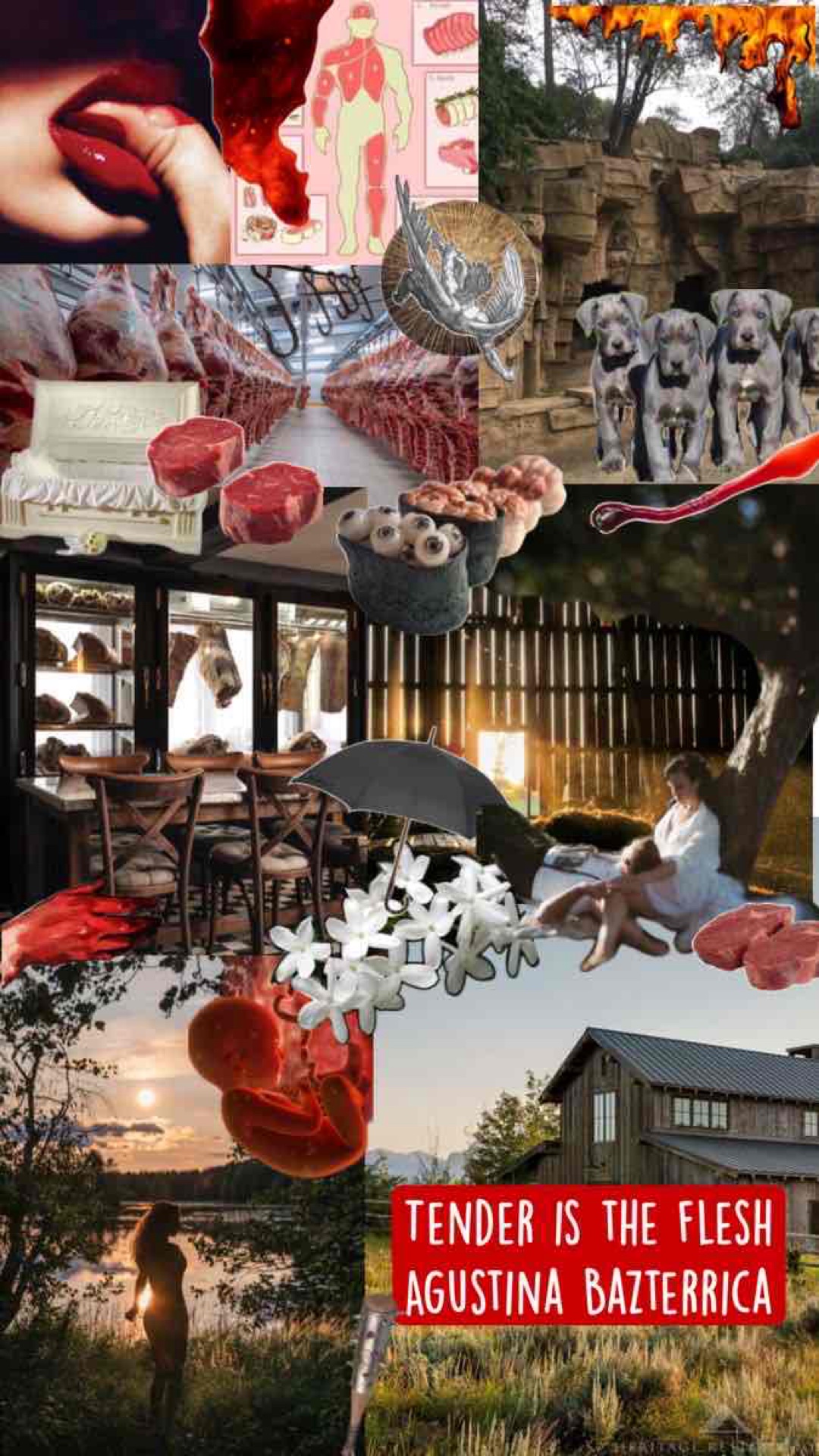
Tender is the Flesh
Tender is the Fleshby Agustina BazterricaPushkin Press

1. Mai
The real monster was capitalism all along
Rating:5

The real monster was capitalism all along

This book is an amazing piece of work. It's a wild dystopian story where animals and their meat became deadly to humans, but don't worry there's a quick solution "Special Meat", great against overpopulation as well. Eating humans? Don't be ridiculous that's barbaric, also calling them that is illegal, their called head or product and the whole industry is tailored to them from breeding to fast food (including game resorts for those looking for the thrill of the hunt). It's deep, brutal, horrifying and crushing. In my opinion a great piece on humanity and capitalism and morality. I'd recommend it, if you can stomach it, because there will be a lot of fucked up stuff in there

Tender is the Flesh
Tender is the Fleshby Agustina BazterricaPushkin Press
30. März
Rating:3

Kannibalistische Dystopie

Tiere wurden von einem Virus befallen und Menschen können wohl doch nicht ohne Fleisch leben, also essen sie sich einfach gegenseitig. Hätte man mehr aus der Story machen können? Ja, man hätte erklären können, wie es zum Kannibalismus kam, wie es passiert ist, dass Menschen zum schlachten gezüchtet werden. So war es einfach das Fenster in ein völlig anderes Leben, in einer völlig anderen Zeit. Es zu lesen regt auf jeden Fall zum nachdenken an, allerdings gibt es nicht viel spannende Handlung. Aber manchmal ist das Leben ja auch nicht spannend, sondern nur gleichförmig und ein bisschen grausam.

Tender is the Flesh
Tender is the Fleshby Agustina BazterricaPushkin Press
20. Feb.
Rating:2

2.5 stars DnF at 50 %, skimmed the middle and read the end. Argentinian dystopia. Tender is the Flesh (originally Cadáver exquisito) by Agustina Bazterrica operates on the same disturbing frequency as Soylent Green, but it pushes the concept to a much colder, more clinical extreme. While in Soylent Green is still trying to wake the world up, Bazterrica shows a world that is already wide awake but simply doesn't care. Both stories use the consumption of human flesh as the ultimate metaphor for predatory capitalism and total alienation. When we stop seeing the "other" as an individual, they become a resource. ​It portraits the Normalization of the Unthinkable. In Soylent Green, the revelation ("Soylent Green is people!") is the climactic twist. In Tender is the Flesh, this horror is the starting point. The society has already institutionalized the consumption of humans, rebranded them as "special meat," and codified it into law. ​ While Soylent Green focuses on overpopulation and hunger, Bazterrica focuses on dehumanization. It’s not just about the necessity of eating; it’s about how quickly we are willing to redefine others as "products" to maintain our lifestyle. The word "human" is strictly avoided for those being slaughtered. They are "units," "pieces," or "stock." This mirrors how modern society speaks about factory farming. Language is used to surgically remove empathy. ⛔️SPOILER ⛔️SPOILER⛔️ SPOILER⛔️ ⛔️SPOILER ⛔️SPOILER⛔️ SPOILER⛔️ Marcos’s relationship with the female "specimen" he is given is the heart of the metaphor. He believes he is "better" or more "human" than others because he doesn't slaughter her immediately, but instead forms a bond. Marcos’s final decision proves that in this world, there are no "good" people left. He uses the woman for the exact purpose he claimed to despise: as a means to an end (for a child, for his own legacy).

Tender is the Flesh
Tender is the Fleshby Agustina BazterricaPushkin Press
14. Feb.
Rating:2

Man hätte mehr draus machen können

Die Buchbeschreibung hat mich voll gecatcht, war gespannt auf das Buch, aber wurde ehrlich gesagt etwas enttäuscht. Aus der Idee und der Welt hätte man viel mehr machen können. Es wurden relativ viele Charaktere eingeführt, die gefühlt im nächsten Kapitel gar keine Rolle mehr gespielt haben.

Tender is the Flesh
Tender is the Fleshby Agustina BazterricaPushkin Press
31. Jan.
⭐️⭐️⭐️
Rating:3

⭐️⭐️⭐️

Ich fand es echt interessant, das Buch zu lesen, und auch spannend, wie verzwickt und gleichzeitig erschreckend sich die Ereignisse entwickeln. Die Richtung, in die sich die Geschichte bewegt, hat mich definitiv gepackt, vor allem das Ende, mit dem ich so nicht gerechnet hätte. Persönlich hätte ich mir aber mehr Handlung gewünscht und weniger innere Gedankengänge und alltägliche Abläufe des Protagonisten. Das hat sich stellenweise echt gezogen. Außerdem wimmelt es in dem Buch nur so von gestörten Persönlichkeiten, eine unberechenbarer als die andere. Wenn man Horror mag, kann man Tender Is the Flesh auf jeden Fall lesen, aber für mich ist es den riesigen Hype, den es bekommt, nicht wirklich wert.

Tender is the Flesh
Tender is the Fleshby Agustina BazterricaPushkin Press
12. Nov.
Rating:5

This review may contain spoilers: Upon completing this novel, I found myself needing time to reflect on what I had just read. It is undoubtedly one of those “What am I reading?” books — yet this confusion is not inherently negative. Rather, it reflects the author’s ability to confront readers with a disturbing and thought-provoking scenario. Set in an alternative universe where the consumption of animals has been prohibited, the narrative introduces a society in which humans are bred specifically for food. This inversion of norms serves as a powerful allegory, compelling the reader to reconsider ethical questions surrounding meat consumption and the treatment of animals in industrial farming. The text provokes discomfort precisely because it mirrors real-world practices, thereby exposing the moral contradictions of human behavior toward other species. Personally, the scenes depicting cruelty toward puppies were especially distressing, as they highlight the emotional proximity between humans and animals. As a dog owner, I found this depiction particularly painful, reinforcing the idea that humanity itself has become the primary threat to other living beings through its exploitation of nature. In conclusion, this dystopian horror novel is both unsettling and enlightening. It effectively uses shock and inversion to challenge anthropocentric perspectives and encourage ethical self-reflection. The narrative’s disturbing quality ultimately serves a didactic purpose, inviting readers to confront uncomfortable truths about violence, consumption, and moral responsibility.

Tender is the Flesh
Tender is the Fleshby Agustina BazterricaPushkin Press
16. Okt.
"This book will pull you in, take hold, and not let go until you read the final page." -Christina Dalcher
Rating:3.5

"This book will pull you in, take hold, and not let go until you read the final page." -Christina Dalcher

Mit 240 Seiten ist man mit "Tender is the flesh" relativ zügig durch. Man bekommt einen ungeschminkten Einblick in eine Gesellschaft, in der Tiere von einem Virus befallen wurden und man nun Menschen als "Vieh" züchtet, schlachtet und verarbeitet. Das Buch ist spannend beschrieben aber teilweise auch nichts für schwache Nerven. Für mich genau das Richtige. Leider gibt es wenig Hintergrundinformationen zu der bestehenden Situation in der Welt. Beim Lesen wird man mit dem Hauptcharakter und den Menschen in seiner Umwelt leider nicht wirklich warm, da doch vieles sehr oberflächlich beschrieben wird. Alles in Allem aber ein sehr spannender Einblick in ein gesellschaftskritisches Thema, bei dem man das Gefühl bekommt, dass es uns in einem utopischen Szenario vielleicht auch Mal so ergehen könnte. (Auf Englisch gelesen.)

Tender is the Flesh
Tender is the Fleshby Agustina BazterricaPushkin Press
7. Sept.
Rating:1

Was mid at best, waste of time

I was absolutely looking forward to reading something that criticizes our society and our relationship with meat and the very much possible scenario that instead of not eating meat - we would actually create a human farm to feast off. Sadly this book only describes the grotesque farm itself but not necessarily much more. The women are silenced and used to breed, impaired so they dont end themselves.. but thats pretty much it.. :( Also it turns into getting back with my ex story but very bizarre.. the main protagonist who works at a human farm is gifted a breed slave and instead of butcherin her. He keeps her as his personal slave and impregnates her.. which leads to him getting back together with his ex-wife since they now have "their" kid "back" which theyve lost - this caused the outfall of the relationship.. and yeah thwn they kill that poor slave woman. I was hoping for so much more. What a waste. :/

Tender is the Flesh
Tender is the Fleshby Agustina BazterricaPushkin Press

5. Aug.
Rating:2

What was the goal here? That's the question I'm left with after having just finished this book. Personal note: I'm very much ranting here because I'm a bit annoyed that there was so much potential here and it was basically just wasted. This book started out so well. The setup was very out there and super captivating. What if we can't eat, own, etc. animals anymore because of a deadly virus and humans after some time start eating other humans? You get these very graphic descriptions of a slaughterhouse but instead of animals you have humans, or as the author writes "head". You get these descriptions of how humans do everything in their power to reduce the cognitive dissonance that they would ultimately get from eating other humans by doing everything they can to adapt their language and at least remove as much of that brutality and especially the humanity of the "special meat" that they can. Unfortunately, that's where the good things about this book end. What you catch on fast when you read this book is that the author just made a list of things that are done to animals and decided to describe them in a somewhat gory fashion and write some flimsy attempt of a story around it. Every time there was any kind of plot happening, that did not directly describe what happens to the "head", I was left wondering "When will we read about x? When will we read about y?" and without fail not soon after you get that. You get the slaughterhouse, you get the laboratory and the list goes on. Considering the book has 200 pages I'm pretty sure you can see how this is bad. There is not enough time to sit with any of the topics, digest them, or have some in-the-book examination of any of the topics. You have Markos, the main protagonist and moral anchorpoint (who is actually freaking terrible himself), and then a bunch of people, usually the boss of company x, who is a caricature of some evil whatever, rinse and repeat. This gets boring so fast and there is so much wasted potential here of showing the diversity of humanity, of showcasing moral dilemma and cognitive dissonance. But no, everyone is either evil or stupid. Except for Markos who is a better than others amazing person because he doesn't just believe the government and stops eating meat. We just very expertly ignore that he rapes and impregnates a female head. Which could have been a cool plot to explore if it was so terribly handled. In the end, I was so confused about what the goal of this book was. Because in the beginning, it seems so clear. But because the author tries to start like 20 discussions with this book and is basically looking at this terrible thing, and this terrible thing and this - I was just left confused. Are we having a discussion about eating meat? About how terrible animals are treated? What was that ending - why add it, what's the point? Why are dragging experimenting into this? We get a super short chapter on how in a laboratory there are experiments done on the "head" but it's okay because reasons. Why put it in this book? This is an important issue but it would a) need much more space and time to do it justice and b) the literal point of the first half of the book (actually even more) was that we have these humans that we don't call humans but they are and do to them what we otherwise only do to animals. Adding laboratory experiments to this - why? Until very recently (& maybe/probably still) we have done atrocious things to humans in the name of science. The author even mentions Mengele and describes experiments that have even been done on human subjects in real life. This part made me question if the author knew enough about human experimentation because it didn't seem that way??? Why do you weaken this world you set up like this? Did you really need more shock value in your already super gory book that bad? I don't understand. One last point that I need to get out - can authors please be more cautious of how they write about topics that can be straight up transferred to disabled people? There were multiple moments in this book that I found straight-up ableist. And I'm not saying you cannot discuss and bring up such things. But they need to be handled with care and the author just absolutely did not do that. Statements were made, including from the main character, that really should not have been made or should have been very critically evaluated. Do better.

Tender is the Flesh
Tender is the Fleshby Agustina BazterricaPushkin Press
27. Juli
Rating:1.5

“The human being is the cause of all evil in this world. We are our own virus.“ I really wanted to like this. The premise is so fucking fascinating. Unfortunately, the narrative was flat. The main character was so distant and emotionless. I think the book is intended to shock readers but the lack of connection made it impossible to feel bad for any of the characters. The author really focussed on the way they kill the head. If the book would have had a story, the shock value would have been greater. Honestly, the whole thing just read like a string of sentences. No real story, no depth. Disappointing.

Tender is the Flesh
Tender is the Fleshby Agustina BazterricaPushkin Press

6. Juni
Rating:5

Düster, verstörend, brillant.

Wow. Ein wenig fehlen mir die Worte um 'Tender is the Flesh' gerecht zu werden. Der erste Teil ist ein düsteres, makaberes Spiegel vorhalten welches unsere Gesellschaft und was Massentierhaltung und der Konsum von Fleisch eigentlich bedeuten unfassbar darstellt. Der zweite Teil trifft einen ähnlichen wenn auch anderen Ton der aber mindestens genauso düster ist und schließt mit einem Ende ab welches mich absolut geschockt hat. Ein absoluter Must-Read! "What a compelling, terrible beauty this novel is. My heart was breaking even as my skin was crawling." - Lisa McInerney

Tender is the Flesh
Tender is the Fleshby Agustina BazterricaPushkin Press
15. Mai
Rating:3

I was expecting so much more from this book considering what was said on TikTok. Sure, there were some disturbing aspects but there wasn't much of a story. We follow a guy named Marcos who is the manager at a special meat processing plant. He complains about his life, doesn't really do much about it, and mopes around all day; I just call him Mopey Marcos. We're briefly introduce to characters who are far more interesting and more worthy of a story than Marcos. He's given a top of the line female specimen, and I was expecting that was where the story was going, but we didn't really see much happen with that until the last 6o pages or so. Maybe it's just me, but this was just pretty dull and so much could have been expanded on.

Tender is the Flesh
Tender is the Fleshby Agustina BazterricaPushkin Press
25. März
Rating:3

It was alright. Even though I don't get the hate, I do think it could have been better. It was definitely an interesting read and I loved the idea. It wasn't really horror tho, it was kinda disturbing but not as much as it could have been. Not that the things in the book aren't disturbing, it's just the way that it's written. Generally, the writing style made the story feel kinda dull and not as emotional as it should have been (in my opinion). I do have to give the book props for the message and the plot. It is a really interesting depiction of the human psyche and specism in general. I would recommend the book but only for the idea and not for the writing.Idea: ⭐⭐⭐⭐⭐Writing: ⭐⭐Plot and story: ⭐⭐⭐

Tender is the Flesh
Tender is the Fleshby Agustina BazterricaPushkin Press
21. März
Rating:5

Heftig - ein must read

Wie würde eine Welt aussehen, in der Tiere nicht mehr für den menschlichen Konsum genutzt werden könnten? Ich mag düstere Bücher – aber DAS war heftig. Es hat mir das Herz herausgerissen und mich regelmäßig gezwungen, das Buch wegzulegen und minutenlang einfach nur an die Wand zu starren. Es war absolut keine angenehme Lektüre, und Spaß hatte ich dabei definitiv nicht – aber trotzdem würde ich an diesem Buch nichts ändern. Es ist perfekt, so wie es ist. Unbedingt vorher die Content Warnings lesen! Das Buch hat mich noch veganer gemacht, als ich es ohnehin schon war. Es zeigt auf erschütternde Weise, wie sehr sich die Menschheit von der Natur und fühlenden Lebewesen entfremdet hat. Tiere werden in jeder nur erdenklichen Form ausgebeutet – nicht, weil es notwendig ist, sondern aus purer Ignoranz. Wir stellen uns über Lebewesen, die unseren Schutz verdienen. Als Veganerin war mir das ganze Leid natürlich bewusst, aber das hat mich nicht weniger wütend gemacht. Das Buch hat mir noch einmal deutlich gezeigt, wie eng Speziesismus, Rassismus, Klassismus und Sexismus miteinander verknüpft sind – und wie wenig „fortschrittlich“ wir Menschen eigentlich wirklich sind.

Tender is the Flesh
Tender is the Fleshby Agustina BazterricaPushkin Press
25. Feb.
Rating:4

Eine dystopische Horrorstory, die einfach zeigt wie unmenschlich Menschen vielleicht sein können und am Ende keine Rettung verdient haben.

Absolut verstörend. Das Buch hat so viele WTF-Momente. Teilweise ist der Schreibstil plump, aber die Schockmomente haben gut davon abgelenkt. Konnte es nicht weglegen! Habe das Buch an einem Nachmittag gelesen und dabei lautstark meinen Schock kundgetan

Tender is the Flesh
Tender is the Fleshby Agustina BazterricaPushkin Press
10. Feb.
Rating:3

Dark and realistic with potential

I think this book could've been so much more than it is. The base story had so much potential but it only focussed on one character and his point of view. It was still very interesting and I was hooked to know how the story continued. But I was desperately waiting for a revolt (from Jasmine, from the workers, from the protagonist,...). This story stayed inside a very narrow plotline but the idea itself is dark and dystopic and pretty realistic. I also liked the stories from the zoo and the zoo as a metaphor. A lot of the plotlines descend into the void after a while though: What happens to the animals still alive? What are the people in the zoo doing? Will the find out that the animal epidemic is (probably) a hoax? And also all the characters are very intriguing but none of them really get their story. I think this book also made me wanna go vegan because wtf is going on with special meat. I can't unsee it when I see meat or milk now. Maybe it had to be this disgusting for me to understand how animals are being treated not only for meat but for all the animal products.

Tender is the Flesh
Tender is the Fleshby Agustina BazterricaPushkin Press
7. Jan.
Rating:4

I agree with other reviews, saying that the plot at times seemed like its only purpose is to disturb, without much of a red string and a higher purpose behind it. The different locations the protagonist has to go to, the situations he is involved in, and the people he meets, seem like they are competing in being even worse than the previous one. However, while it's often jumping from one of those places to another one, that's horrible in a different kind or similar way, I think the red string is to demonstrate the complete loss of being human and being empathizing, caring, having decency and emotions for others. This is demonstrated in the protagonists' relationship with his sister and other relationships as well as the obvious one, the treatment of the humans destined to die and satisfy the hunger for meat. The plot twist at the end felt defeating and left me hopeless for the world in this book, which I found was a great unexpected ending for the story. I had to reflect a lot while reading it and needed to take breaks due to the graphic content. Thus, it is definitely not a book for sensitive people. It puts the obvious mistreatment and consumption of animal products for the own human gratification into a perspective that leaves no room for justification and what it means to be a living creature that endures pain, has thoughts and the capacity to love, to care, to suffer and grief. Finally, I think it's successfully transferred the message it intends to highlight, and it will probably accompany me for a longer time even tho it was not an easy pill to swallow.

Tender is the Flesh
Tender is the Fleshby Agustina BazterricaPushkin Press
24. Nov.
Kannibalismus wurde legalisiert - zumindest in diesem Buch und die Parallelen zur heutigen Welt sind mehr als real und sehr erschreckend.
Rating:5

Kannibalismus wurde legalisiert - zumindest in diesem Buch und die Parallelen zur heutigen Welt sind mehr als real und sehr erschreckend.

Diese Dystopie hat mich, nicht zuletzt durch die schonungslos brutale und ehrliche Erzählweise, direkt zu Beginn in die Geschehnisse hineingezogen. Die Parallelen zum heutigen Konsumverhalten ziehen sich durch die Szenen, da die Menschen so behandelt werden, wie die Schweine, Kühe und Hühner heute. Dabei stellt man sich mehrmals die Frage, ob die Bio-Haltung wirklich so viel schlimmer ist als die industrielle Zuchthaltung und inwiefern man das heute schon hinnehmen möchte. Die Autorin hält uns Leserinnen in einer real möglichen Zukunft gekonnt den Spiegel vor, allein durch eine nüchtern faktische Darstellung. Die Doppelmoral, das eine menschliche Fleisch kulinarisch zu genießen und anderes menschliches Fleisch zu beweinen, das Essen nicht beim Namen nennen zu können und „spezielles Fleisch“ zu sagen, sowie die sprachliche Abgrenzung und dadurch die Deklassierung von für den Konsum gedachten Menschen wird brilliant umgesetzt. Es wird auch eine mögliche romantische Beziehung zwischen dem Hauptcharakter und einem Menschen zweiter Klasse angeteasert, allerdings darf man hier nicht eine schöne Romance erwarten. Insgesamt ein sehr spannendes Zukunftsszenario, das ich wirklich jedem uneingeschränkt empfehlen kann unter Beachtung von Triggerwarnungen, da die Geschichte wirklich sehr hart und brutal ist. Für mich klare 5 Sterne!

Tender is the Flesh
Tender is the Fleshby Agustina BazterricaPushkin Press
12. Sept.
Rating:1

Nein.

Gute Idee, grauenhafte Umsetzung. Ich wollte mehr über die Welt wissen, warum sie so geworden ist und wieso die Menschen so geworden sind. Stattdessen werden irgendwelche random Aktionen des Protagonisten erzählt, wobei der Plot einfach auch nichts aussagt. Es ist brutal und blutig und zeigt, wie grauenvoll Menschen sein können und sich das niemals ändern wird, aber ich habe mir einfach mehr erhofft. Deswegen einfach ein Nein.

Tender is the Flesh
Tender is the Fleshby Agustina BazterricaPushkin Press

12. Sept.
Rating:3

The best horror stories recount something we consider unbelievable while maintaining enough recognizable elements of our current society to make us reconsider how unbelievable it really is. I was morbidly fascinated with Bazterrica’s retelling of a dystopian society in which the horror’s of the meat industry were translated into cannibalism. I’m happy this was a short book, since I felt thoroughly disgusted all throughout. The writing style and language didn't captivate me as much as the theme. Therefore... 3.5 ⭐️

Tender is the Flesh
Tender is the Fleshby Agustina BazterricaPushkin Press
27. Mai
Rating:3

EAT THY NEIGHBOR. A dystopian tale of a universe where cannibalism is normalized. People are bred in breeding centers for the sole purpose of consumption. The idea of this book is clever and interesting, but a lot of it just seemed sooo out there and unrealistic. It just didn't hit me the way I thought it could. All in all - eating meat is cringe. xo 3⭐

Tender is the Flesh
Tender is the Fleshby Agustina BazterricaPushkin Press
13. Mai
Rating:2.5

Viel Potenzial, was leider nicht genutzt wurde

INHALT Der Roman handelt von einer Dystopie, in der Menschen (im engl. werden diese im Roman als „heads“ bezeichnet) gezüchtet, get*tet und gegessen werden wie Tiere, da der Verzehr von tierischem Fleisch oder auch nur der Kontakt mit Tieren durch einen Virus tödlich für Menschen wurde. REZENSION (EVTL. SPOILER) Die Idee fand ich schon mal sehr spannend (wenn auch verstörend), allerdings hat mir die Umsetzung überhaupt nicht gefallen. Erst einmal war die Geschichte für mich irgendwie total wirr durcheinander, es gab viel zu viele Charaktere, deren Rollen ich immer wieder vertauscht habe und den Protagonisten fand ich trotz seiner rebellischen Einstellung grundsätzlich unsympathisch. Die Stellen, in denen es um die Haltung & Tötung von Menschen wie in der Massentierhaltung ging, waren zutiefst verstörend, sodass mir körperlich schlecht davon wurde. Ich mag es grundsätzlich, wenn mich ein Buch so schockiert, dass ich danach erst mal wieder klarkommen muss, aber hier hatte ich den Eindruck, dass diese Szenen nur geschrieben wurden, um zu schockieren und sie irgendwie im Gesamtzusammenhang des Buches nicht wirklich relevant waren (?) Trotzdem sollte man hier vielleicht erwähnen, dass es Tieren, die zu unserem „Genuss“ großgezogen werden, nicht anders ergeht und der Roman hier einfach nur die Rollen vertauscht (was ich wiederum gut fand, um der Menschheit die Augen zu öffnen). Ich habe auch bis zum Schluss nicht verstanden, was jetzt eigentlich die Storyline sein soll? Geht es um moralische Grenzverschiebungen, oder um die persönlichen Probleme des Protagonisten, oder um die Diskrepanz zwischen seiner Einstellung und seiner Arbeitsstelle? Immer wieder wurde auch die Regierung und deren Umgang mit dem Virus hinterfragt, aber wirklich weiter entwickelt wurde die Frage nicht. Schade, denn gerade der Aspekt warum eine vegane Lebensweise (laut Roman) ungesünder sein sollte als Menschenfleisch zu essen, wäre für mich spannend gewesen. Irgendwie hatte ich insgesamt das Gefühl, dass der Roman zwar ein krasses, spannendes Setting hatte, aus dem man so viel hätte rausholen können, es aber dann nur darum ging zu schockieren. Und der eigentliche Plot letztendlich ein einziges Dahinplätschern war, ohne dass irgendwas passiert oder sich irgendwelche Denkanstöße/Plotansätze mal weiter entwickelt hätten. Ich würde mir wünschen, dass die Autorin das Buch nochmal von vorne schreibt bzw einzelne Ansätze einfach weiter entwickelt (und auch gerne mehr als 200 Seiten dazu schreibt). Denn die Grundidee hatte für mich wirklich sehr viel Potenzial, das leider überhaupt nicht genutzt wurde.

Tender is the Flesh
Tender is the Fleshby Agustina BazterricaPushkin Press
30. Apr.
Rating:4

Blutig, grausam, real.

Wäre ich nicht schon seit fast 20 Jahren Vegetarierin und davon die letzten knapp 10 Jahre vegan, wäre ich es spätestens nach diesem Buch. Das Buch wird mir im Gedächtnis bleiben und dabei nicht einmal aufgrund der sehr detaillierten Beschreibungen, wie Menschen gezüchtet, gehalten, geschlachtet und anschließend verarbeitet werden. Warum? Weil das genau so bereits 1:1 tagtäglich mit Tieren passiert. Man hat hier lediglich Tiere durch Menschen ersetzt. Ich werde länger über das Buch nachdenken, weil es aufzeigt, wie egoistisch wir Menschen sein können. Wie einfach es ist wegzusehen und sich einzureden, man sei mehr wert als anderes Leben, weil man im Geburtenlotto gewonnen hat. Hier und da habe ich mir ein bisschen mehr World building gewünscht, aber letztendlich erleben wir die komplette Geschichte ja aus der Sicht des Protagonisten, der von seiner Umwelt geprägt und manipuliert wird. So wie er sehen wir die Welt durch einen Filter, der Alternativen ausblendet. Das Buch ist eine Kritik an unserem Kapitalismus und unserer egoistischen Gier nach Wohlstand, Geschmack und tierischem Protein. Eine Erinnerung daran, dass es eigentlich nicht allzuviel benötigt, um unsere Moralvorstellungen auf die Probe zu stellen und wie einfach wir Lebewesen objektifizieren, indem wir ihnen die Individualität absprechen. Viele finden, dass die Message nicht subtil genug porträtiert wird. Dass dem Leser durch die Brutalität ein Vorschlaghammer vors Hirn gebrettert wird und das Buch nur schocken möchte. Wer nicht über die Grausamkeiten Schlachtszenen hinaus sehen kann, hat das Buch nicht verstanden. "No one wants them to talk, because meat doesn't talk."

Tender is the Flesh
Tender is the Fleshby Agustina BazterricaPushkin Press

22. Apr.
Rating:5

Erschreckend ehrlich und grausam - ein etwas anderer Blick auf das menschliche Konsumverhalten

Marcos arbeitet als Produktion-Manager in einer Schlachterei und verantwortet den kompletten Ablauf von der Einlieferung, Vorbereitung, Schlachtung und Verteilung. So weit, so gut. Es handelt sich hierbei allerdings nicht um Tier-, sondern um Menschenfleisch. In dieser Erzählung werden Menschen zum Fleischverzehr gezüchtet und Kannibalismus wird, aufgrund eines Virus, welches den Verzehr von tierischem Fleisch unmöglich macht, weltweit als völlig normal angesehen. Marcos hadert mit diesem System und versucht dies, so gut es geht, zu verstecken. Seine persönliche, tragische Geschichte spielt allerdings ebenfalls eine große Rolle. Eine morbide und ekelhafte Geschichte … äh Moment, wieso eigentlich? Wieso wird mir beim Lesen schlecht, nur weil es sich um Menschenfleisch handelt? Wäre mir bei Tierfleisch nicht ebenfalls schlecht geworden? Soviel zur Doppelmoral. Der Spiegel, den Agustina Bazterrica den Lesenden vorhält, könnte krasser nicht sein. Worte schaffen einen Perspektivenwechsel, der es in sich hat und so viele Fragen aufwirft. Dafür liebe ich Literatur. Das Buch kommt gänzlich ohne den erhobenen Zeigefinger und ohne Vorwürfe aus, ist sehr nüchtern und schonungslos geschrieben, und genau das lässt das Hirn rattern. Ich sag nur noch eines: Diese Buch hat auf jeden Fall meine uneingeschränkte Empfehlung - eben wegen dieser zutiefst bedrückenden, surrealen, melancholischen Zukunftsvision. JEDER sollte sich das meiner Meinung nach durchlesen um wachgerüttelt zu werden, um einen einmaligen tiefen Schock zu bekommen, denn darin sehe ich persönlich den Sinn dieses Romans!

Tender is the Flesh
Tender is the Fleshby Agustina BazterricaPushkin Press