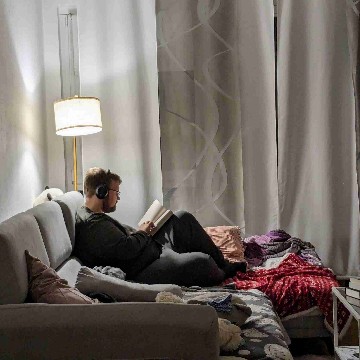
Das Buch war super spannend zu lesen. Das Social Media und das Internet einen schlechten Einfluss auf die Entwicklung von Kindern und Jugendlichen haben kann, weiß man vermutlich. Doch warum ist das so? Jonathan Haidt stellt viele Studien zu diesem wichtigen Thema vor und zeigt auf wie seit dem Aufkommen von Social Media es bei vielen Kindern und Jugendlichen zu vermehrten Angststörungen, Depressionen etc. gekommen ist, der sogenannten “anxious generation”. Mir hat das Buch super viel Spaß gemacht es zu lesen und ich finde es ist heutzutage auch sehr wichtig zu wissen, wie viel Einfluss Social Media bei Jugendlichen haben kann. Haidt stellt gegen Ende seines Buches auch Maßnahmen vor, wie man seine Kinder besser schützen kann.
Ich fand es sehr spannend! Kann es nur sehr empfehlen zu lesen :)
Clear thread and understandable conclusions. I especially liked the chapter summaries, advices on what to do and the additional online material provided. Especially recommended for parents and people working in education.
This book feels like they had one really good chapter and then the rest of the book is just filler to make a whole book out of it.
First: What I loved: The chapter about the influence social media has on female children, especially pre-teen girls was incredibly interesting and it seemed also very well-researched with all the data that was compiled, all the studies that were looked at, all the sides from which this was looked at. You could tell that the author and his team put a lot of effort and time into this chapter and that this is the main thesis of the book.
Mostly, it also didn't have the problems that I had with the rest of the book:
1. Having read [book:Invisible Women: Data Bias in a World Designed for Men|41104077], I might have high standards in that respect, but except for this one chapter, I was left uncomfortable by small number of footnotes. The author makes a lot of statements throughout this book, which he seems to believe are generally accepted to be true, that he doesn't corroborate with a source. While intuitively, I tended to agree with these statements, I didn't think they were in the realm of things where I'd think my intuition was right. Or more precisely: I didn't think that was a statement that we should believe based on intuition alone.
It was a general tendency in this book to find citation on a much lower number of sentences than I would have assumed or sometimes citing some older philosophers, which seemed lacking when looking scientifically at modern society.
I wished for more citations and not finding them in all the places I searched for them, made me sometimes questions, if I can believe this book to be the result of science.
2. The wording would often skew towards the sensationalistic. This did, again, make me question the seriousness of the research, and I was very glad when the author used less of this type of language in the most important (and most-serious) chapters. I wish this had been the case in the rest of the book as well.
3. The divide between the chapter about girls and the next chapter about boys was a cliff. After seeing all the research done that showed all these results for girls (but didn't yield many interesting results for boys), the chapter about boys felt like pure speculation. The author obviously didn't find all that much research that yielded any results for boys yet, which would have been fine, as the chapter about the influence on girls was so good, but the author made connections based on the data he had that felt very flimsy, and I would have preferred a "more research has to be done on this topic" much more than what we got. If the connections weren't as flimsy as they were presented, there was a serious issue in the way it was presented because it did not show through. Already the length of the chapter and the amount of sources cited gave a picture of having much less data, and as the data was also much less conclusive as the one for the girls, I wondered why the author even bothered to present it as if these results were equivalent in value.
What bugged me most, is that in the midst of all of these mediocre, under-cited, under-researched and/or sensationalistic chapters, there is this one brilliant one, so the author could have written a full book with the scientific backbone present in that chapter, he just didn't.
I still learned a lot of interesting things, even in the other chapters, but it was exhausting to take note after every thing that I learned, if this was cited or a legitimate conclusion from the data presented, or a statement presented by the author as fact without the necessary citations or data backing it up.
A book that I don't regret reading and also wouldn't recommend people away from, but also not exactly a book I would recommend, as it's not as seriously scientific as I would have liked. I will likely recommend the chapter about the way social media influences girls, though, because that one is legitimately good, and the science appeared very rigorous to my eye.
But then again: You should never trust a statistic that you haven't falsified yourself.
I do hope the author is as serious a scientist as he presents himself to be, and that the research in that chapter can be trusted.
3 stars.
Aside from the obvious dangers in the digital world with a lack of age verification, this book focuses on what else changes in the young users mind when using social media.
The constant attention grabbing stream of low quality content creates an opportunity costs that is unfixable.
Children do not partake in the real life anymore, their minds are impacted by the content.
The eye opener for me? Children started displaying symptoms of tourette after consuming content of a creator with that very syndrom. Were they ill? No. They adopted the behavior. I did not know that this level of impact could happen through social media, causing symptoms and behavior changes without any real reason.
The challenges of parents raising Gen Alpha are hard and societal norms are not making it easier. Jonathan Haidt presents the importance of a play-based childhood with numerous studies, including evidence that early access to social media has a severe effect on underage children. It focuses mainly on the anglosphere but also mentions studies from other regions.
While listening to the book, i felt more and more grateful for the child-friendly city planning that Germany executes and also the societal structures it provides to raise independent children and adolescents.
(sorry mum that I was always mad at you for making me go play outside)