The Sea
Buy Now




By using these links, you support READO. We receive an affiliate commission without any additional costs to you.
Description
Book Information
Posts
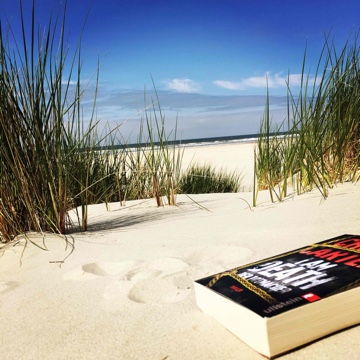

It's a very poetic book, though very depressive and sad at the same time. Max, who lost his wive a short time ago, decides to go back to the summer holiday town of his childhood, where he rents a room in the house in which his first love(s) lived. He tries to get over his wive's death while he remembers the old time. USA Today says about The Sea that it's a "meditation on mortality, grief, death, childhood and memory..." and I agree with that. It gives an idea about the whole book, though I would definitely add violence and cruelty, which are in my opinion two main themes of the story. Violence and cruelty in Max' life, in his love, in his lovers but also violence against animals and other kids and of course the cruelty of diseases as well as of memories. The author uses a very poetic style, as I already mentioned above, which is expressed by lots of wonderful stylistic elements. And he also uses very detailed descriptions and down to the last tiny bit written down thoughts, which was sometimes helpful to understand Max but sometimes it was all too much. I didn't like the hypochondrical thoughts, that came up from time to time. And there were some other memories I would have preferred not to read about...but well. It's a difficult book, difficult in many ways, but the most difficult thing for me now is to tell if I liked it or not. And I simply can't :) After reading the whole 195 pages I still don't know. Maybe it's like a piece of art: Sometimes you like it, sometimes you hate it and sometimes you just don't know.

The book is introvert and tranquil. The story is a forth and back between what has been and what is; past and present. Mr. Banville manages it to creat a very distinct atmosphere. The narrator contemplates over his first love, childhood and how it changed during just one summer. He ponders over recent events, namely the death of his wife. While he does so, the tune of his telling is distant but not free of a certain fondness. He doesn’t go overboard with grief or nostalgia; he reflects. All those events and about himself. Like everyone of us, he as well is not flawless and he knows it or comes to realise it the further he carries the reader through the story. Don’t expect a storytelling novel here. There are two main strings of stories that get told, but they stay in the background as golden threads while the narrator gives us an insight of himself. It is a long, greatly written farewell to childhood and loved ones. John Banville has a wonderful way with words. I loved his writing and his view for tiny details in a scenery that – stressed out – benefitted the entire atmosphere of a scene described. The only thing that slightly bugged me (but more out of personal preference) was the narrator’s view of women. They are all a bit dull and chubby. His daughter aside. Nevertheless still a very great book, with a lot of unasked questions in between the lines that lets one ponder over oneself, past and present. I liked the little twist on the last 10 pages but this review shall remain “spoiler free”.
Description
Book Information
Posts
It's a very poetic book, though very depressive and sad at the same time. Max, who lost his wive a short time ago, decides to go back to the summer holiday town of his childhood, where he rents a room in the house in which his first love(s) lived. He tries to get over his wive's death while he remembers the old time. USA Today says about The Sea that it's a "meditation on mortality, grief, death, childhood and memory..." and I agree with that. It gives an idea about the whole book, though I would definitely add violence and cruelty, which are in my opinion two main themes of the story. Violence and cruelty in Max' life, in his love, in his lovers but also violence against animals and other kids and of course the cruelty of diseases as well as of memories. The author uses a very poetic style, as I already mentioned above, which is expressed by lots of wonderful stylistic elements. And he also uses very detailed descriptions and down to the last tiny bit written down thoughts, which was sometimes helpful to understand Max but sometimes it was all too much. I didn't like the hypochondrical thoughts, that came up from time to time. And there were some other memories I would have preferred not to read about...but well. It's a difficult book, difficult in many ways, but the most difficult thing for me now is to tell if I liked it or not. And I simply can't :) After reading the whole 195 pages I still don't know. Maybe it's like a piece of art: Sometimes you like it, sometimes you hate it and sometimes you just don't know.
The book is introvert and tranquil. The story is a forth and back between what has been and what is; past and present. Mr. Banville manages it to creat a very distinct atmosphere. The narrator contemplates over his first love, childhood and how it changed during just one summer. He ponders over recent events, namely the death of his wife. While he does so, the tune of his telling is distant but not free of a certain fondness. He doesn’t go overboard with grief or nostalgia; he reflects. All those events and about himself. Like everyone of us, he as well is not flawless and he knows it or comes to realise it the further he carries the reader through the story. Don’t expect a storytelling novel here. There are two main strings of stories that get told, but they stay in the background as golden threads while the narrator gives us an insight of himself. It is a long, greatly written farewell to childhood and loved ones. John Banville has a wonderful way with words. I loved his writing and his view for tiny details in a scenery that – stressed out – benefitted the entire atmosphere of a scene described. The only thing that slightly bugged me (but more out of personal preference) was the narrator’s view of women. They are all a bit dull and chubby. His daughter aside. Nevertheless still a very great book, with a lot of unasked questions in between the lines that lets one ponder over oneself, past and present. I liked the little twist on the last 10 pages but this review shall remain “spoiler free”.