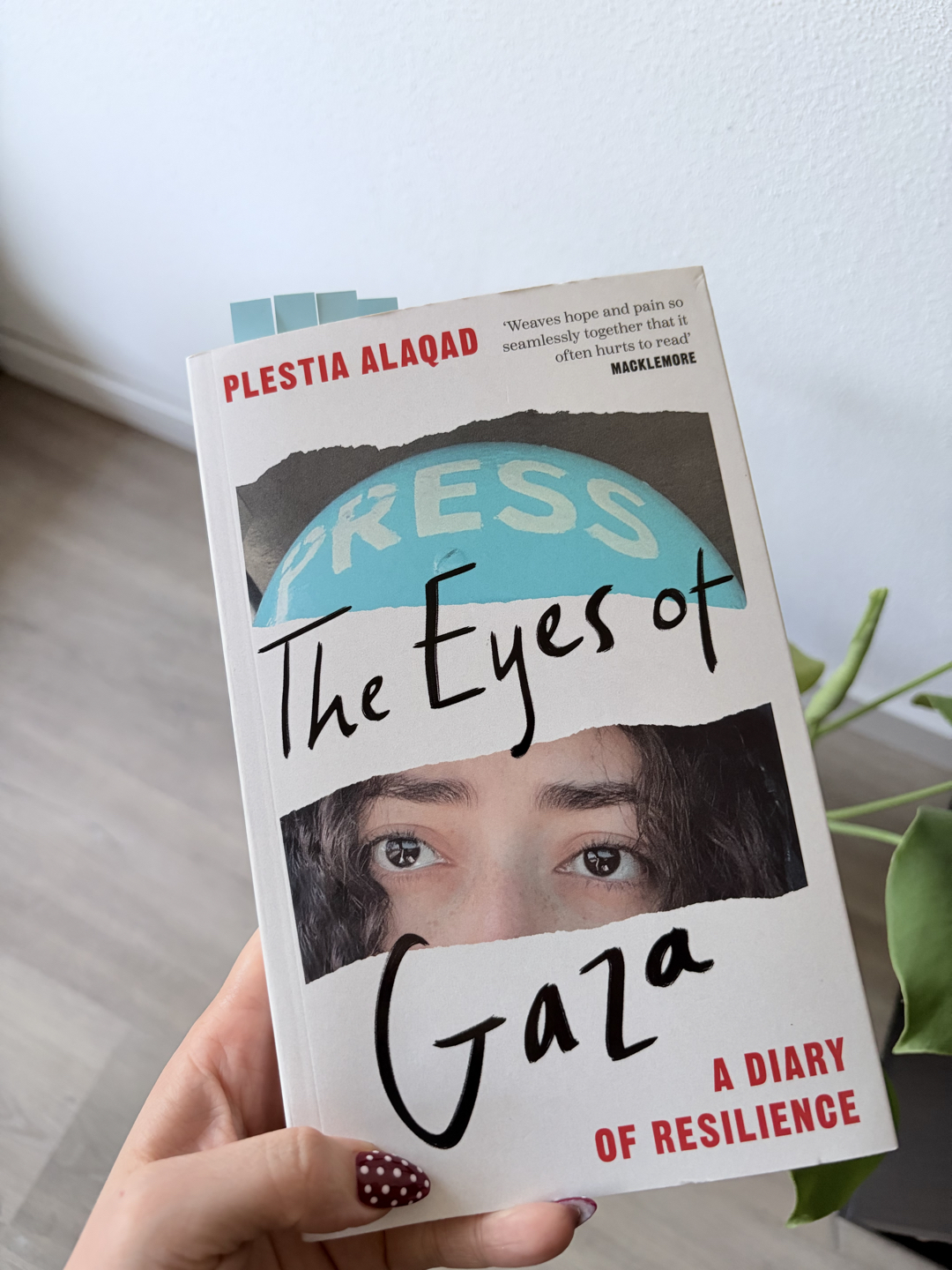
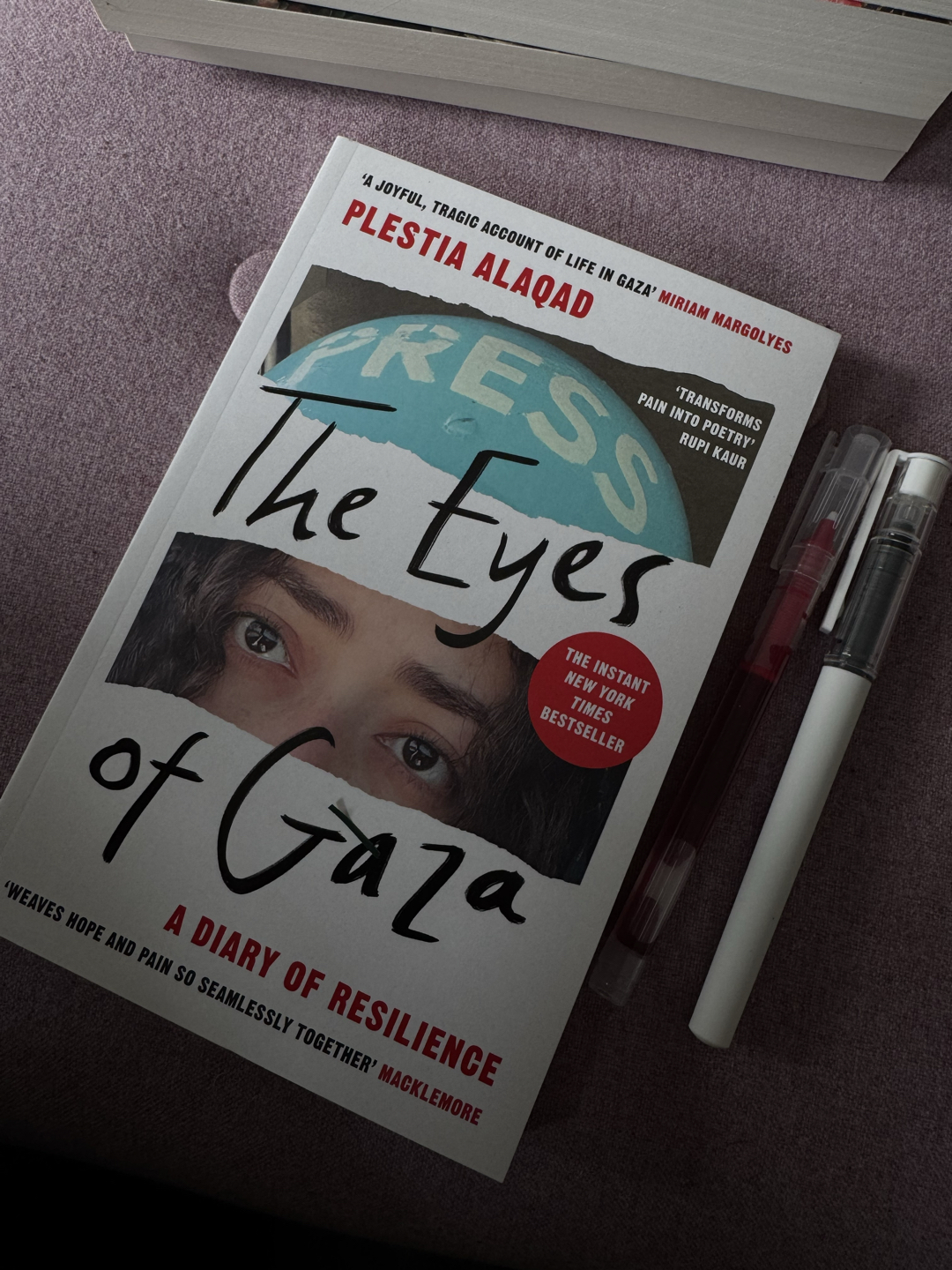
This felt like a raw awakening for me, pulling me out of the role of a distant observer and placing me directly into Plestia Alaqad’s reality. As I turned the pages, I felt a simmering anger at the injustice of it all. The way a 22-year-old’s life and dreams could be upended so violently while the world watched. The shock hit me in the small details she shared, making me realize that these weren't just statistics, but lives exactly like mine and yours, filled with favorite songs, family jokes, and simple plans for the future that were suddenly shattered. The sadness I felt was heavy and constant, mourning not just the buildings lost, but the peace of mind stolen from an entire generation. Yet, somehow, Plestia managed to leave me with a sense of hope that felt incredibly hard-earned. Seeing her refuse to stay silent and watching her community find ways to care for one another amidst the ruins was a powerful reminder of the human spirit’s resilience. For me, this book wasn't just a collection of diary entries… it was a personal connection to a voice that refused to be erased, forcing me to truly see Gaza through her eyes.
I can’t rate the Book with Stars its cruel to rate peoples real life experiences with that
To all my Palestinian friends,may you be protected, may you be safe, and may you one day live in peace and freedom.
To the beautiful souls who have lost their lives,may you rest in peace. You deserved so much more than this world gave you.
It breaks my heart to know how different our lives can be, even when we are the same age, living in the same time. Plestia and I are only three months apart, yet our realities could not be more different. That truth is something I cannot ignore.
This is not just something to read and move on from. It is something to feel, to carry, and to remember. Every human being should take a moment to truly see, to listen, and to care.
Some stories are not meant to be rated or measured. They are meant to be witnessed—with respect, with empathy, and with an open heart.
Ein sehr emotionales, ehrliches und bewegendes Tagebuch. Eine Geschichte die Menschen nicht nur in Gaza sondern auf der ganzen Welt teilen. Das hat mich wirklich sehr berührt. Aber neben Trauer und Leid gibt einem das Buch auch Mut. Mut laut zu werden und nicht weg zu schauen. Es macht wütend und melancholisch zugleich. Ich bin dankbar zufällig in der Bücherei über dieses Buch gestolpert zu sein - definitiv eine Geschichte, die es verdient gehört zu werden.
„Have we become so dehumanized that killing has become justified and normalized? You might be wondering what to do to not feel survivors guilt or sorry for yourself. The answer is that we should keep speaking up for Palestine even if that doesn’t change the world. We must not allow the world, as cruel as it might seem, to change our hearts. It’s important that at the end of the day, when you look at yourself in the mirror, you see a person who stands up for what’s right in this world.”
The Eyes of Gaza isn’t just a book you read; it’s one you carry with you.
Reading The Eyes of Gaza felt less like picking up a book and more like being invited into someone’s most private thoughts - the kind of things you write down just to survive, not because you expect anyone else to read them. Plestia Alaqad doesn’t dress anything up, doesn’t try to make it easier to digest. Her words are raw, vulnerable, and achingly honest. They carry the weight of a reality that is too often reduced to headlines or numbers, when in fact it’s about real people, real lives, real heartbreak.
There were moments that made me stop and just sit in silence, because the feelings were too much. Anger, sharp and burning, at the injustice and cruelty of it all. Sorrow, so deep it left me blinking back tears. Hopelessness, because there are times when the devastation feels overwhelming and endless. But then - somehow - there was also hope. A quiet, stubborn hope woven into the cracks. A child holding on to a small piece of normality, a family clinging to love amid loss, a voice refusing to be silenced. That hope is fragile, but it’s also powerful.
What surprised me most is what the book stirred in me after I put it down. It left me restless. Unsettled. Asking myself questions I don’t know how to answer: What can I do? How can I possibly make a difference from so far away? I’m just one person - what power do I have? It’s uncomfortable to sit with those questions, but maybe that’s exactly what this book is supposed to do - to refuse to let us look away, to push us into feeling and caring more deeply, even when it hurts.
For me, The Eyes of Gaza isn’t just a book I read and shelved. It stays with me, tugging at the back of my mind, reminding me of stories I can’t unknow. It made me realise that even if I can’t change everything, even if I can’t stop the violence or undo the suffering, I can still bear witness. I can still listen. I can still speak about it. And maybe, in small ways, that matters.
This book is heavy, yes. Heartbreaking, absolutely. But it’s also necessary. It made me feel more alive, more human - because to read it is to connect with someone else’s pain, resilience, and truth. The Eyes of Gaza is not just something you read; it’s something you carry with you long after the last page.