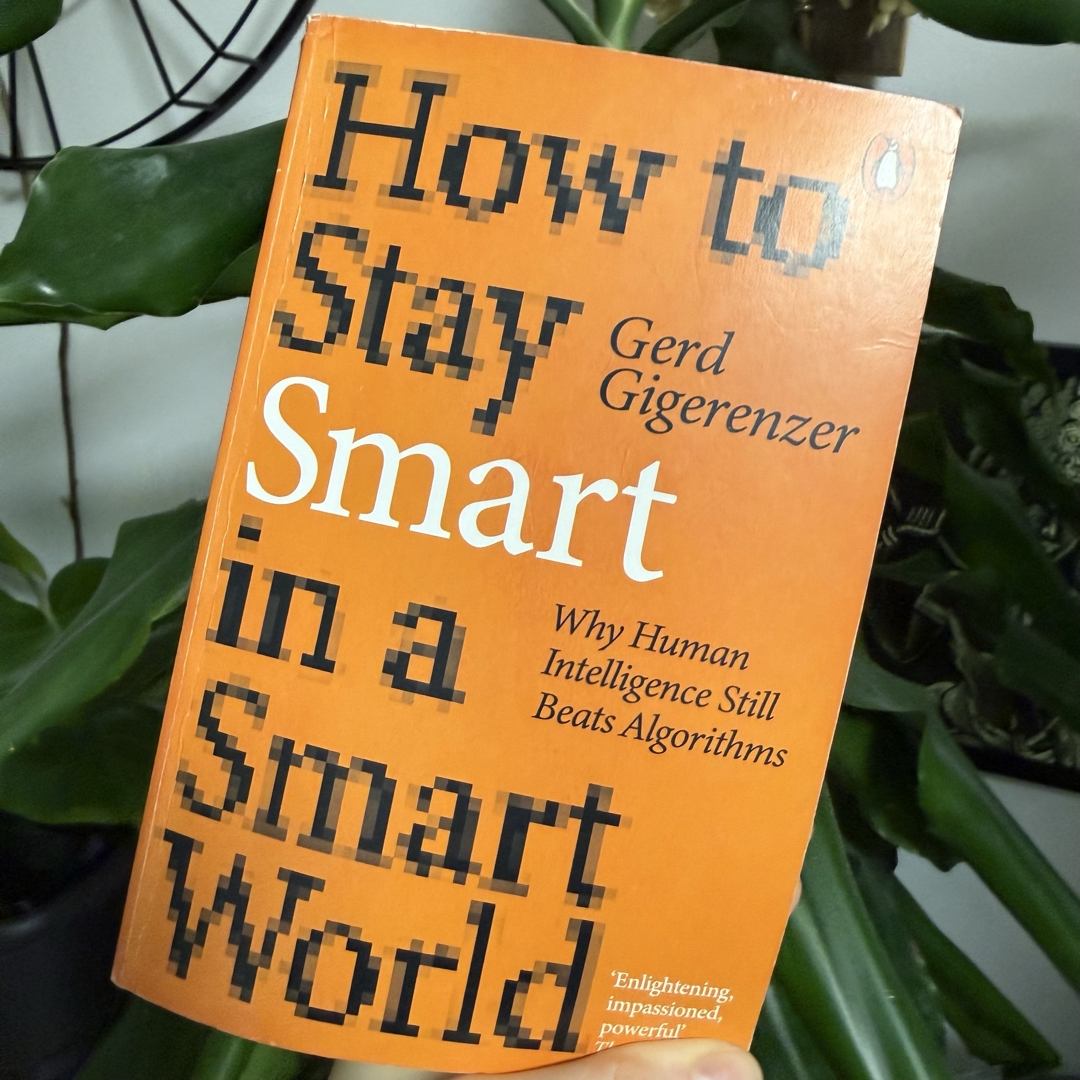
How to Stay Smart in a Smart World: Why Human Intelligence Still Beats Algorithms
Jetzt kaufen




Durch das Verwenden dieser Links unterstützt du READO. Wir erhalten eine Vermittlungsprovision, ohne dass dir zusätzliche Kosten entstehen.
Beschreibung
Buchinformationen
Beiträge

Tolles Buch!
How to Stay Smart in a Smart World ist eine tolle Einführung in die Grenzen Künstlicher Intelligenzen sowie deren Verhältnis zu menschlichem Denken und Handeln. Obwohl das Thema stellenweise stark technologisch geprägt ist, sind die Kapitel klar strukturiert und verständlich geschrieben, sodass sich das Buch vor allem für AI-Einsteiger gut eignet. Positiv hervorzuheben ist, dass sich der Autor als deutscher Psychologe nicht ausschließlich auf Beispiele aus den USA bezieht, wie es in vielen anderen AI Büchern der Fall ist, sondern auch Bezüge zu Deutschland herstellt. Zahlreiche Anekdoten sowie vereinzelte Abbildungen lockern den Text zusätzlich auf und machen das Buch insgesamt lebendig und angenehm zu lesen.
Beschreibung
Buchinformationen
Beiträge
Tolles Buch!
How to Stay Smart in a Smart World ist eine tolle Einführung in die Grenzen Künstlicher Intelligenzen sowie deren Verhältnis zu menschlichem Denken und Handeln. Obwohl das Thema stellenweise stark technologisch geprägt ist, sind die Kapitel klar strukturiert und verständlich geschrieben, sodass sich das Buch vor allem für AI-Einsteiger gut eignet. Positiv hervorzuheben ist, dass sich der Autor als deutscher Psychologe nicht ausschließlich auf Beispiele aus den USA bezieht, wie es in vielen anderen AI Büchern der Fall ist, sondern auch Bezüge zu Deutschland herstellt. Zahlreiche Anekdoten sowie vereinzelte Abbildungen lockern den Text zusätzlich auf und machen das Buch insgesamt lebendig und angenehm zu lesen.